
Call us: (267) 338 9798

Common Tile Installation Mistakes Philadelphia Homeowners Should Avoid is your quick, friendly guide to tiling success. You’ll learn how to pick the right tile and layout, match tile to room use and moisture, prepare a solid subfloor, choose the correct adhesive and thinset, use proper spacers and grout, cut tiles the right way, and waterproof wet areas to stop leaks. Trust Almeida Perfect Tile in Philadelphia to guide you from consultation to final reveal so your project is smooth and built to last. For a closer look at professional tile installation near Philadelphia, tile installation services near Philadelphia.
Key Takeaway
- Make sure your floor is flat and dry — Almeida Perfect Tile handles prep for you.
- Use the right adhesive and grout for your Philly home — Almeida Perfect Tile chooses the best.
- Lay out your tiles before you start so cuts fit cleanly — Almeida Perfect Tile plans the layout.
- Seal your grout to stop stains and water damage — Almeida Perfect Tile uses proper sealers.
- Call pros if you’re unsure to avoid costly fixes — Almeida Perfect Tile delivers a smooth finish.
Choose the right tile and layout for your home
Choosing tile isn’t just about color. You’re shaping how your space feels, flows, and lasts. Consider Philadelphia’s daily life — humidity in kitchens, grit in busy foyers, and how the layout affects space. The right tile size, pattern, and layout should enhance room feel and practicality while staying within budget. Almeida Perfect Tile offers bold statements and subtle textures, with guided choices on tile size, pattern, and layout so your project feels deliberate.
Color and finish affect maintenance and durability. Lighter tiles reveal dust and grout more quickly; darker shades hide wear but may require more cleaning to stay vibrant. Textured finishes look great but can trap dirt in high-traffic areas. We help you balance aesthetics with practicality to withstand Philadelphia’s weather and daily life. Your layout should consider future needs, so you invest in a timeless look.
When paired with a thoughtful layout, you get a space that’s easy to live in and maintain. We provide mockups and sample boards to visualize patterns like herringbone, diagonal, or straight lay before you buy. The goal is a cohesive look that complements cabinets, countertops, and lighting. Almeida Perfect Tile is a partner who cares about every detail from measurements to the final reveal.
Quick win: Ask about our room-by-room tile recommendations and sample boards to see how different layouts affect light and space in your Philadelphia home. For guidance on contractor options, see our guide on choosing the right tile contractor in Philadelphia.
Match tile to room use and moisture
Moisture is the main factor in kitchens and baths. Choose tiles that resist water, stains, and mold, while staying comfortable underfoot. For splash zones, porcelain or ceramic with low water absorption handles humidity and spills without warping. In living areas, select durable glazes and surfaces that won’t scratch easily. Almeida Perfect Tile helps you pair tile with room use so you won’t regret the choice after the first wipe-down.
In entryways and mudrooms, durability matters most. High-traffic tiles with strong wear resistance and forgiving texture that doesn’t show every scuff are ideal. For bathrooms, larger tiles reduce grout lines; pair with a grout color that hides dirt between cleanings. Outdoor spaces in Philadelphia require frost-resistant tiles and proper installation to handle seasonal changes. Our team guides you to tiles that resist cracking from freeze-thaw cycles and stay slip-resistant.
Choosing the right tile for moisture and use isn’t flashy, it’s smart. It saves you time, money, and headaches down the line. — Almeida Perfect Tile
For planning costs and expectations, see tile installation costs in Philadelphia. Tile installation costs in Philadelphia.
Avoid common tile errors Philadelphia homeowners
You’ll hear plenty of tips, but a few mistakes pop up again and again. Underestimating grout quantity is common: too little grout crowds joints and invites dirt; too much makes cleaning harder. We help you pick a grout width and color that stay clean longer and look consistent across rooms. Another misstep is choosing a layout without checking room dimensions; a tiny bathroom with a large pattern can feel off. We provide layout plans that balance scale and proportion from the start.
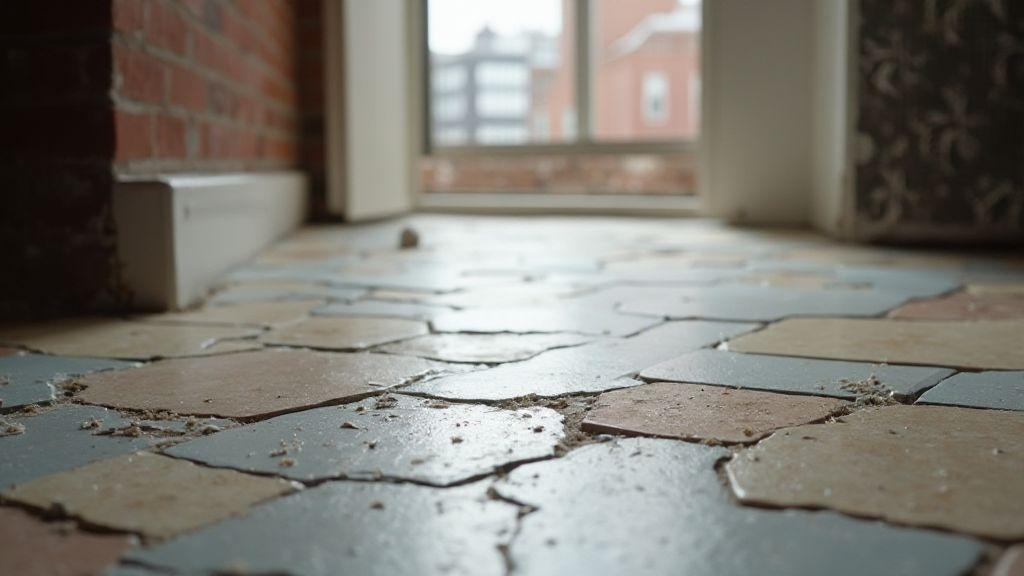
Poor surface prep is another culprit. If the substrate isn’t solid, tile will crack or loosen. We evaluate flatness and moisture barriers before laying a single tile. Finally, neglecting expansion joints in large floors leads to cracking as temperature and humidity change. Almeida Perfect Tile ensures proper movement space, keeping your floor level and stable for years.
If you’re unsure about tiling over existing floors, see our guide for Philadelphia homeowners. Can you tile over existing floors? Guide for Philadelphia homeowners.
Quick reference for subfloor prep by room
- Kitchen: Porcelain or ceramic, medium to large format
- Bathroom: Ceramic or porcelain, slip-resistant
- Entry/Mudroom: Porcelain, textured or matte
- Living Areas: Large-format porcelain or natural stone
Prepare your subfloor the right way for your tile
A solid base makes or breaks tile longevity and appearance. Almeida Perfect Tile starts with subfloor prep to protect your investment in Philadelphia. We check level, address cracks, and manage movement before tiling. A good subfloor isn’t glamorous, but it’s the backbone of a flawless installation. Preparation saves time and money; whether you DIY or hire us, expect meticulous assessment and a plan tailored to your space. A rock-solid subfloor is your best defense against loose, uneven tiles.
For best results, trust Almeida Perfect Tile to assess and prepare your subfloor. Call (267) 338-9798 to start. For preparation guidance, see how to prepare your home for a flooring installation in PA.
Check for level, cracks, and movement
Confirm the floor is level. Use a straightedge or laser level to spot high spots or dips. In Philadelphia’s mix of old and new spaces, minor dips can cause lippage or cracked grout if ignored. Flatten high spots and fill low spots with a compatible leveling compound. We use professional-grade tools to keep the job within tolerance.
Next, check for cracks or movement. Hairline cracks can worsen under tile, and movement may require sistered joists or additional underlayment. If issues exist, repair before tiling. A level surface with no cracks or movement yields a better-looking, longer-lasting tile installation. Almeida Perfect Tile includes these checks as part of our comfort-focused service.
If you’re unsure about repairs or subfloor issues, see tile repair vs replacement—what’s best for Philly floors. Tile repair vs replacement—what’s best for Philly floors.
Fix improper subfloor preparation
Removal of loose material and cleaning are essential. Grind high spots or fill low areas with appropriate leveling material, and allow full cure before tiling. If cracks or movement are present, reinforce the subfloor with plywood or cement board overlays as needed. The goal is a stable base that resists shifting or cracking under daily use. Almeida Perfect Tile follows a careful process to keep your tile looking clean and even for years.
Table: Quick reference for subfloor prep (What to check)
- Level: Is the floor flat within tolerance?
- Cracks: Are there visible cracks in subfloor or underlayment?
- Movement: Any squeaks, soft spots, or flex?
- Underlayment: Is it damaged or degraded?
- Fixes: Grind high spots, fill low spots, or replace damaged underlayment as needed.
Proper subfloor prep isn’t flashy, but it makes every tile line up perfectly and stay that way. It’s the detail Almeida Perfect Tile lives for in Philadelphia homes.
Repair or replace damaged underlayment
Underlayment supports tile performance. If damaged, repair or replace before setting tile. Damaged underlayment can cause soft spots or tile failure. Remove the affected area, assess the substrate, and replace with a thin, sturdy layer compatible with tile type and adhesive. In Philadelphia spaces, we often recommend cement board or latex-modified thinset over plywood for rigidity. The right choice depends on space, traffic, and moisture exposure. Almeida Perfect Tile guides you through selection and installation, ensuring compliance with codes and best practices.
Table: Quick reference for subfloor prep (continued)
- Level
- Cracks
- Movement
- Underlayment
- Fixes
Pick the correct adhesive and thinset for your floor
Choosing the right adhesive and thinset sets up a durable tile floor. Consider tile type, substrate, room conditions, and traffic. Heavier, denser tiles need stronger binding, and certain environments require moisture or temperature resistance. The right combination keeps your floor flat, level, and looking great for years.
Table: Adhesive/thinset recommendations by tile type and substrate
- Porcelain or ceramic on concrete slab: Ultra-thinset flexible mortar or latex-modified thinset
- Natural stone on concrete or backer board: White polymer-modified thinset
- Large-format tiles on concrete or backer board: Large-set or medium-bed thinset
- Vinyl or gauged ceramic on proper underlayment: Standard thinset or as recommended by underlayment
Choose product for your tile type and substrate
Tile type and substrate drive product choice. Porcelain on concrete may use polymer-modified thinset for large formats and moisture exposure. Natural stone benefits from a white, non-staining thinset. Backer board or wood subfloors require products rated for movement and moisture. Almeida Perfect Tile helps you pick the right blend for your job in Philadelphia.
Two tips: check cure time and pot life, especially for weekend projects. Read substrate instructions—some floors need additives, priming, or specific trowel sizes. Almeida Perfect Tile provides guidance matched to your tile and substrate to avoid wasted time or money.
Prevent wrong tile adhesive choice
Don’t choose adhesive just because it’s on sale. A cheap option can lead to premature bond failure, mold under tiles, or uneven grout cure. Ensure the adhesive is rated for your tile type and environment. For Philadelphia bathrooms or kitchens, choose moisture-resistant adhesive with a longer cure time. Almeida Perfect Tile helps you select the correct product for a smooth project.
Follow mixing and cure times
Follow manufacturer directions precisely. Water ratios and mixing speeds matter; too much water weakens the bond, too little creates dust and weak adhesion. Keep room temperature and humidity in check. If unsure, call Almeida Perfect Tile at (267) 338-9798 for a quick consult. We tailor mix and setup to your space to avoid sunken grout lines or loose tiles.
Pro tip: Pre-mix a small batch to test viscosity and tack before committing the full bag.
Use proper spacers and grout methods in your install
Spacers keep joints uniform for a clean, durable finish. They help maintain even joints through traffic and seasonal changes. Our team guides you through layout planning and spacer sizes that suit your tile size and room type. Proper spacers and consistent joints prevent chipping and moisture ingress, resulting in a professional look from foyer to restroom.
Pair a grout method with your tile and space. Some tiles tolerate epoxy grout in wet areas; others perform best with cementitious grout in low-moisture zones. Almeida Perfect Tile matches you with the right method for Philadelphia’s climate and use, ensuring a floor or wall that holds up to daily wear.
Proper spacers and grout aren’t optional — they’re the backbone of a long-lasting tile job.
Always use tile spacers, not using tile spacers is costly
Skipping spacers leads to crooked lines, visible misalignment, and long-term weak spots. In Philadelphia, even small misalignments show up in high-traffic areas. Spacers prevent grout leakage around edges and help edges stay true as tiles shift with temperature changes. Almeida Perfect Tile recommends permanent or removable spacers as appropriate to keep lines straight during setting and beyond.
Stop uneven grout lines early
Uneven grout lines signal deeper issues: improper layout, rushed work, or inconsistent setting. They can cause chipping, water seepage, and instability. We teach you to monitor grout thickness, maintain consistent spacing, and finish with a matching grout to your tile. Edging and depth consistency prevent debonding and crack propagation later.
Great grout is the quiet hero of a tile job. It holds the look together and protects the surface from daily wear. — Almeida Perfect Tile
For cost planning, see how much tile installation costs in Philadelphia. Tile installation costs in Philadelphia.
Cut and fit your tiles with the right tools
Tools matter for a clean, professional finish. A basic kit includes a tile cutter for straight lines, a wet saw for intricate or large cuts, a carbide-tipped nipper for small notches, and a bevel or tile file for smoothing edges. Have a pencil, straight edge, and a scrap tile for test fits. Porcelain requires tougher blades; ceramic is more forgiving. Cut slowly near edges or curves to avoid chipping. Almeida Perfect Tile emphasizes precision to prevent future issues. If unsure, call (267) 338-9798 for tailored tool recommendations in Philadelphia.
Practice makes perfect: dry run patterns on scrap tile to gauge layout before cutting. Consider expansion gaps and baseboard layout for a seamless flow. The right tools and patience yield a professional finish you can be proud of.
Need tailored tool recommendations? Almeida Perfect Tile can guide you to the best cutters, blades, and safeties for your tile type and space in Philadelphia. For timing guidance, see how long floor tile installation takes in Philadelphia homes. How long does floor tile installation take in Philadelphia homes.
Avoid incorrect tile cutting techniques
Rushing or guessing leads to common mistakes. Do not cut dry without water cooling on a wet saw, and avoid forcing bad angles. Measure twice, cut once, and test with a scrap tile. Watch for over-cutting around outlets and fixtures; mark precise lines with a pencil and use a tile nipper for small adjustments. If unsure, our team can guide you through the correct sequence.
Careful cuts save you floors that fit like a glove and a finish that lasts. — Almeida Perfect Tile
Prevent DIY tile installation mistakes when cutting
Lay out your pattern before cutting, use spacers for even grout lines, and test measurements with a scrap tile. Keep work area clean and dry; wear safety glasses and gloves when handling glass or polished tiles. After each cut, wipe edges for precise fits. If you hit a snag, pause, reassess, and proceed methodically. Our Philly team is here to help troubleshoot.
Measure twice, cut once
Waterproof and allow movement for your wet areas
Waterproofing is essential in Philadelphia environments. We design waterproof layers that fit showers, bathrooms, or wet rooms, allowing the floor to breathe and move with temperature changes. Your space gets a reliable system of membranes, sealants, and grout to prevent leaks and warping. We tailor waterproofing to use and traffic to ensure a durable surface for years.
Pro tip: Proper waterproofing saves money on repairs and keeps your space looking new longer. For budgeting context, see bathroom tile installation costs in Philadelphia. Bathroom tile installation costs in Philadelphia.
Seal showers and wet rooms to stop leaks
A sealed shower or wet room is your first defense against leaks. We seal seams and edges with shrinkage- and cracking-resistant products, then test for issues before finishing. Proper perimeter joints and transitions prevent moisture from sneaking through, ensuring a comfortable, worry-free Philadelphia bathroom.
Never ignore movement gaps or expansion joints
Movement gaps accommodate expansion and contraction due to temperature and humidity. In Philadelphia, expansion joints prevent cracks and buckling. We plan joints in the layout and select materials that flex without breaking. It’s a small detail with a big impact on longevity.
Add joints and proper sealants
Joints and sealants finish edges, accommodate movement, and keep water out of seams. For Philadelphia projects, this creates a durable surface that handles daily life with ease.
Table: Key steps for waterproofing and movement control (at a glance)
- Water-proof membrane installation — Blocks moisture from subfloors; prevents mold and tile failure in humid environments
- Shower/wet room sealing — Stops leaks at seams and edges; keeps bathrooms dry and protects structure
- Movement planning and expansion joints — Allows floor to breathe; reduces cracks and tile pops
- Joints and sealants — Finishes and seals edges; maintains grout integrity and blocks water
At Almeida Perfect Tile, we treat your space like our own with careful planning, precise execution, and a finish you can rely on. For a deeper dive into project timelines, see how long a tile installation project takes in Philadelphia. How long does a tile installation project take in Philadelphia?
Conclusion
By following these proven steps, you’ll achieve a tile installation that’s durable, easy to maintain, and beautiful for years. Start with the right tile and layout that fit your daily life and Philadelphia’s environment, then pair it with a solid, prepared subfloor and proper moisture barriers. Choose the correct adhesive and thinset for your tile type and substrate, and use spacers and grout consistently for clean, even joints. Don’t overlook waterproofing in wet areas and the crucial expansion joints—they protect against leaks and cracking. If you’re unsure, Almeida Perfect Tile is your local partner for a smooth, professional finish from consultation to final reveal. For a clearer sense of overall project scope and costs, see how much tile installation costs in Philadelphia. Tile installation costs in Philadelphia.